
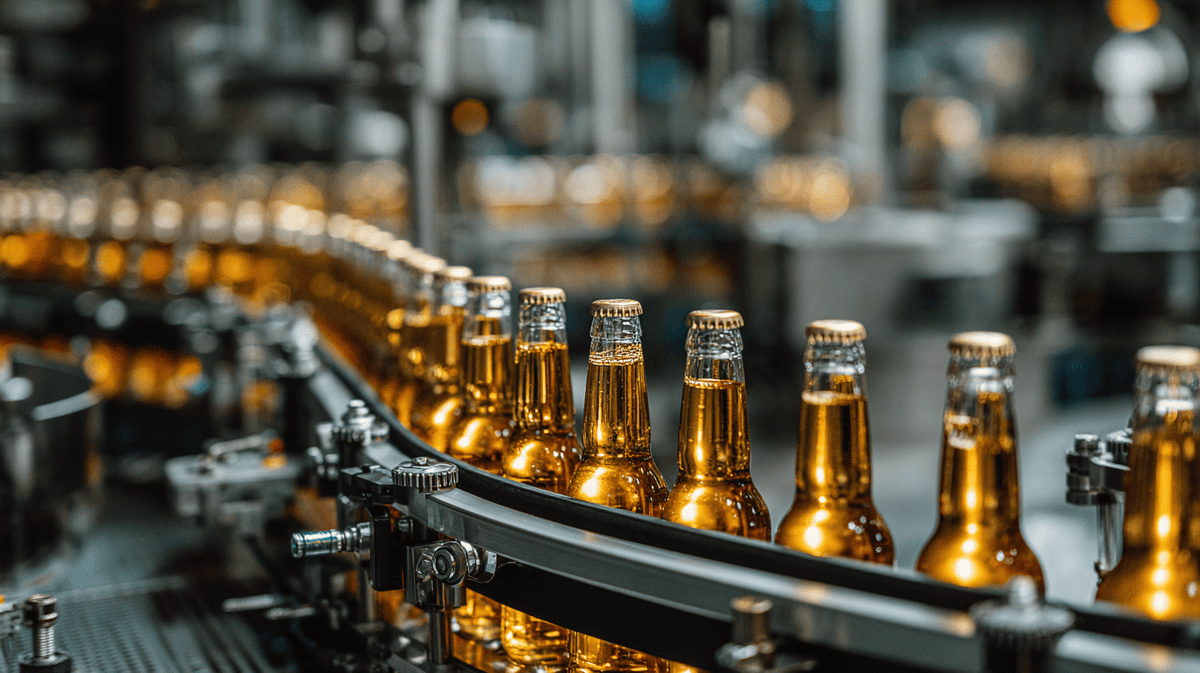
Filling machines are a cornerstone of modern manufacturing, playing a crucial role in the packaging process across various industries. These machines are designed to efficiently fill containers with a wide range of products, from liquids to powders, ensuring precision and consistency. Among the many applications of filling machines, industrial beer filling lines stand out due to their complexity and the high standards required for beverage production. This article explores the components, automation, and high-speed performance of industrial beer filling lines, providing insights into how these systems operate to meet the demands of the brewing industry.
Components of Industrial Beer Filling Lines
Industrial beer filling lines are intricate systems composed of several key components, each playing a vital role in the overall process. At the heart of these lines are the filling machines themselves, which are designed to handle the specific requirements of beer packaging. These machines must ensure that each bottle or can is filled to the correct level, maintaining the quality and taste of the beer.
In addition to the filling machines, beer filling lines include other essential components such as rinsers, cappers, and labelers. Rinsers are used to clean the containers before filling, ensuring that no contaminants affect the beer’s quality. Cappers are responsible for sealing the containers, preserving the beer’s freshness and carbonation. Labelers then apply the necessary branding and information to the containers, readying them for distribution.
For more detailed information on the components of beer filling lines, you can visit https://stm-pack.com/complete-filling-lin/beer-filling-lines/.
Automation in Beer Filling Lines
Automation is a critical aspect of modern beer filling lines, enhancing efficiency and reducing the potential for human error. Automated systems are designed to handle repetitive tasks with precision, ensuring that each step of the filling process is executed flawlessly. This includes everything from the initial cleaning of containers to the final sealing and labeling.
Advanced sensors and control systems are integrated into these lines to monitor the process in real-time, allowing for immediate adjustments if any discrepancies are detected. This level of automation not only improves the speed and accuracy of the filling process but also ensures compliance with industry standards and regulations.
Automation also plays a significant role in maintaining the consistency of the product. By minimizing human intervention, automated beer filling lines can produce large volumes of beer with uniform quality, meeting the high expectations of consumers and retailers alike.
High-Speed Performance of Beer Filling Lines
The demand for beer is ever-increasing, and breweries must keep up with this demand by optimizing their production processes. High-speed performance is a hallmark of modern beer filling lines, enabling breweries to produce large quantities of beer in a short amount of time without compromising quality.
High-speed filling machines are capable of processing thousands of bottles or cans per hour, thanks to their advanced design and technology. These machines are equipped with multiple filling heads, allowing them to fill several containers simultaneously. This not only speeds up the process but also ensures that each container is filled accurately and consistently.
For breweries looking to expand their production capabilities, investing in high-speed beer filling lines is a strategic move. These lines not only increase output but also reduce operational costs by minimizing downtime and waste.
To explore more about beer canning machines and their high-speed capabilities, visit https://stm-pack.com/machines-categories/canning-machines/beer-canning/.
In conclusion, industrial beer filling lines are a testament to the advancements in manufacturing technology. By integrating sophisticated components, automation, and high-speed performance, these systems enable breweries to meet the growing demand for beer while maintaining the highest standards of quality. As the industry continues to evolve, filling machines will undoubtedly play an even more significant role in shaping the future of beverage production.