
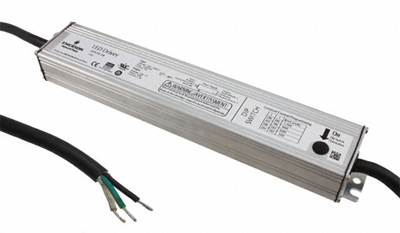
How to Choose the Right LED Power Supply for Your Project
None 0 Years 0 Months
, United States
No Information
About Me
How to Choose the Right LED Power Supply for Your Project
Choosing the right LED power supply is essential to ensure your lighting project is safe, efficient, and long-lasting. Whether you're installing LED strips in your home, illuminating signage, or designing custom lighting for a product, the power supply (also known as a driver or transformer) is the heart of your system. Selecting the wrong type can lead to flickering lights, premature failure, or even safety hazards. In this article, we’ll walk you through the key factors to consider when choosing an LED Power Supply Supplies for your project.
1. Determine the Power Requirements of Your LEDs
Before selecting a power supply, you need to know how much power your LED lights will consume. Start by checking the wattage rating of the LED product. For example, if your LED strip uses 12 watts per meter and you plan to use 5 meters, the total power requirement will be:
12W/m × 5m = 60W
It’s recommended to choose a power supply that provides at least 20–30% more wattage than your total load to ensure reliability and avoid overloading. In this example, a power supply rated for at least 75W would be ideal.
2. Choose the Right Output Voltage
LED products operate at specific voltages—most commonly 12V or 24V DC. The power supply you choose must match the voltage rating of your LEDs. Using a power supply with the wrong voltage can damage the LEDs or cause them to malfunction.
Tip: Never connect 24V LEDs to a 12V power supply or vice versa. Always check the LED specifications first.
3. AC or DC? Understand the Input and Output
Most LED lights run on direct current (DC), while your wall outlet supplies alternating current (AC). Therefore, most LED power supplies convert AC to DC. Be sure the power supply you're considering provides DC output if your LEDs require it (which is the case for most LED strips, modules, and bulbs designed for low-voltage systems).
You should also verify the input voltage range of the power supply (usually 110V or 220V AC) to ensure it matches your local power grid.
4. Consider the Environment
Where will the power supply be installed? If it's going to be used outdoors or in a damp area, you’ll need a power supply with a high IP (Ingress Protection) rating. For example:
â— IP20: Suitable for dry indoor use.
â— IP65/IP67/IP68: Suitable for outdoor or wet environments.
Overlooking this factor can lead to electrical failures or safety risks in humid or wet locations.
5. Constant Voltage vs. Constant Current
There are two main types of LED power supplies:
â— Constant Voltage (CV): These provide a fixed voltage output, typically 12V or 24V. Most LED strips and signage use constant voltage drivers.
â— Constant Current (CC): These supply a fixed current (e.g., 350mA, 700mA), and the voltage varies based on the LED load. High-power LEDs and modules often require constant current drivers.
Make sure you understand what type your LED product needs—using the wrong type can damage the LEDs.
6. Dimming Capability (Optional)
If your project requires dimmable lighting, you'll need a dimmable power supply. There are several dimming methods including:
â— TRIAC (for AC dimmers)
â— 0-10V (commercial applications)
â— PWM (Pulse Width Modulation)
Ensure your dimmer and power supply are compatible with each other and with your LEDs.
7. Safety Certifications and Protections
For safety and reliability, look for LED power supplies that have the following protections:
â— Overload protection
â— Short circuit protection
â— Overvoltage protection
â— Overtemperature protection
Also, check for safety certifications like UL, CE, RoHS, or FCC, depending on your region and application.
8. Size and Mounting
Don’t forget the physical dimensions of the power supply. It must fit the space where you plan to install it—whether that’s in a junction box, under a cabinet, or in a waterproof enclosure. Some power supplies come with mounting brackets for easier installation.
Conclusion
Choosing the right LED power supply may seem technical, but it comes down to understanding your LED’s needs and matching those with the appropriate specs. Always plan for a little overhead in wattage, verify the voltage and current type, and consider your installation environment. Investing in a quality, properly rated power supply ensures not only the performance of your LEDs but also the safety and longevity of your entire lighting project.
If you're ever in doubt, consult the LED Power Supply manufacturer’s specifications or ask an expert before making a purchase. A little research upfront can save you from major headaches down the road.
Academic Education
Not Mentioned any education details!
Professional Detail
No work experience added yet!
Skills
No Skills Added Yet!
Followers
People you should follow


