
How GolfDren Makes Your Turf Healthier, Greener and More Playable
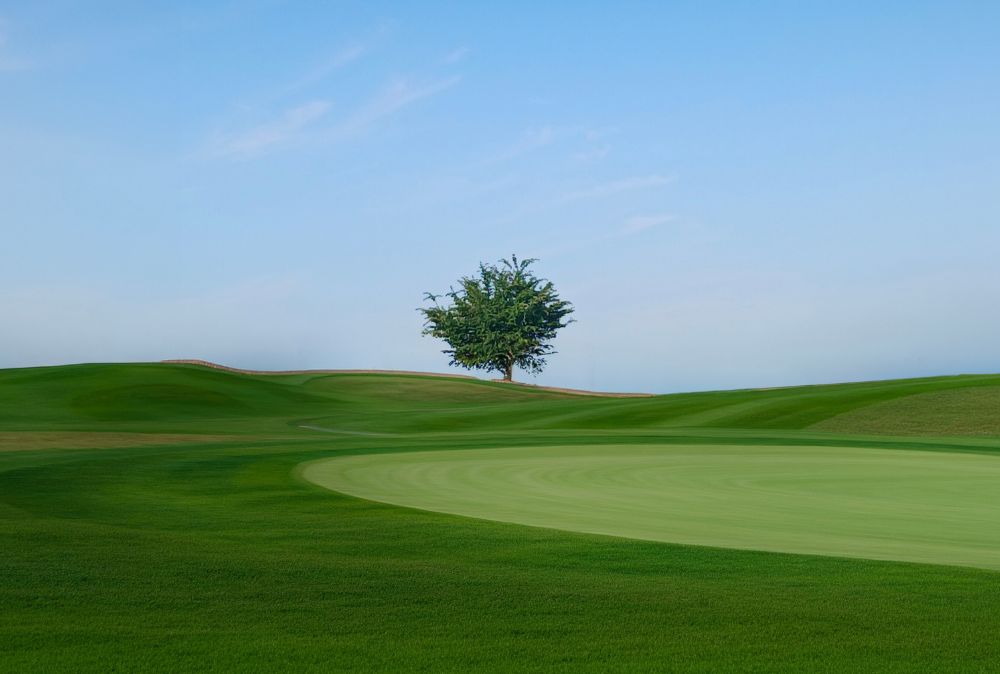
Want to know how professional turf stays healthy, green and playable all year? Discover the key methods, costs and technologies behind successful turf management. Read the article to learn how aeration, biochar and proper maintenance improve long-term turf performance.
Key Takeaways
- Healthy turf depends on regular mowing, irrigation, fertilisation and aeration.
- Deep aeration can reach up to 30 cm, improving root growth, drainage and soil health.
- Biochar remains effective for hundreds to thousands of years and improves water and nutrient retention.
- Sod installation provides an instant playing surface, with full use typically possible after 4–6 weeks.
- Natural turf installation costs range from €25,000 to €120,000+ (£20,000 to £100,000+) for a football pitch, while sod installation typically costs €6 to €18 per m² (£5 to £15).
- Long-term investment in soil health reduces maintenance costs and keeps turf greener, stronger and more playable.
What Is Turf Management?
Turf management is the ongoing practice of keeping grass healthy, dense, and functional. It covers mowing, watering, fertilising, aerating, and renovating. Get it right and the surface looks great and plays even better.
How Do Golf Courses Maintain Their Grass?
Golf courses use a combination of precision mowing, regular irrigation, seasonal fertilisation, and aeration. Most employ full-time greenkeeping staff whose only job is the condition of the turf. The standard is high because playability depends directly on surface quality.
Greens are typically mowed daily during the playing season, often to a height of just 3–5 mm. Fairways are cut several times a week. Roughs are left longer and mowed less frequently.
Irrigation is usually automated, running in the early hours of the morning to minimise evaporation. Water usage per course varies enormously by climate and size, but a typical 18-hole course can use anywhere from 100,000 to over 500,000 gallons per day in dry conditions.
How Often Are Golf Greens Mowed and Watered?
Greens are mowed almost every day during peak season. Watering frequency depends on temperature and rainfall, but in dry spells automated systems may run every night.
The goal is consistency. Even a slightly uneven moisture level can affect how the ball rolls. This is why greenkeepers monitor soil moisture constantly.
How Often Should You Aerate?
Most turf professionals aerate at least once or twice a year. High-traffic areas like greens and tees may need more frequent treatment. The exact timing depends on soil type, grass species, and how compacted the surface has become.
How Golf Greens Are Made and What Grass They Use
Building a golf green from scratch is a serious investment. The base layer, drainage system, soil profile, and grass species all have to work together.
What Grass Is Used on Golf Greens?
The most common species on UK and European courses are creeping bentgrass and fescues. Bentgrass tolerates very low mowing heights and produces a smooth, fast surface. Fescues are hardier and more drought-tolerant, which makes them popular on links courses.
In warmer climates, bermudagrass is widely used. It handles heat and heavy play well, but goes dormant in winter. Each species requires a different maintenance approach.
Are Golf Courses Real Grass?
Yes, almost always. Artificial surfaces are used for some practice facilities and short-game areas, but playing greens and fairways are natural grass. The quality of that grass is the result of years of management, not just good seed.
Some courses do use synthetic turf around bunker edges or on extreme slopes. This is especially common during golf bunker renovation, where edging and shaping often happen at the same time.
How Much Does a Turf Field Cost?
Costs vary dramatically depending on the type of facility. Installing natural turf on a football pitch typically runs from £20,000 to £100,000+ depending on size, drainage, and specification. A golf green renovation can cost tens of thousands on its own, and sod installation costs vary just as much depending on scale and specification.
When Sod Is the Right Answer
Sometimes seeding just isn’t fast enough. When a surface needs to be playable quickly after renovation, sod is the only real option.
What Is Sod Installation and When Does It Make Sense?
Sod installation means laying pre-grown grass, complete with a thin root layer, directly onto prepared soil. The result is an instant surface. It’s used after heavy renovation, storm damage, or when a complete species change is needed.
It’s more expensive than seeding, but the turnaround time is weeks rather than months. For facilities that can’t afford a long closure, sod installation is often the more practical choice.
Sod Delivery and Installation Cost
Sod is priced by the square metre or square yard. Delivery and installation costs depend on distance, volume, and site access. As a rough guide, expect to pay £5–£15 per square metre for supply and installation combined, though specialist sports turf can cost more.
Preparation of the base also adds to the cost. Poor base prep is the main reason sod fails early, so skimping here is a false economy.
How to Take Care of Sod After Installation
The first two weeks are critical. The sod needs consistent moisture to allow the roots to knit into the soil below. Watering two to three times per day is common in warm weather.
Avoid any foot traffic for at least two weeks. Mow for the first time once the grass reaches around 5 cm, but remove no more than a third of the blade height.
When Can You Walk on Sod After Installation?
Light foot traffic is usually fine after two to three weeks. Full sporting use typically requires four to six weeks. The exact timeline depends on temperature, moisture, and how well the roots have established.
A simple tug test works well: if the sod resists when you pull a corner, the roots have taken hold.
The Case for Deep Aeration
Soil compaction is one of the most underestimated problems in turf management. It restricts root growth, reduces drainage, and leads to weak, stressed grass. Aeration is the solution.
Why Aeration Is Important
As soil compacts, air and water struggle to reach the root zone. Roots stay shallow. The grass becomes less resilient to drought, disease, and heavy play. Regular aeration reverses this.
It also allows fertilisers and soil amendments to penetrate more effectively. A compacted surface wastes a significant portion of whatever you apply to it.
How Deep Does Aeration Go?
Traditional hollow-tine aeration reaches around 10–15 cm. More advanced methods go considerably deeper. GolfDren’s Air 2G2 technology, for example, uses compressed air injected through needles to disrupt the soil profile down to 30 cm, reaching areas that conventional machines simply can’t access.
The air spreads both vertically and horizontally, covering a working width of 224 cm per pass. Critically, it leaves the surface intact so the course stays open for play.
How Much Does Lawn Aeration Cost?
Costs vary depending on the method and the area involved. Traditional hollow-tine aeration for a standard pitch might cost a few hundred pounds. More specialised deep-aeration services are priced per project.
The better question is what compaction is costing you in lost playability, increased irrigation, and poor turf response. Advanced turf management from GolfDren covers both the technology and the approach.
What Biochar Actually Does for Your Soil
Biochar sounds technical, but the concept is simple. It’s a form of charcoal produced from organic material at high temperatures, and when added to soil it changes the structure permanently.
What Is Biochar and How Does It Work?
Biochar has an extremely porous structure. It retains moisture during dry periods and helps drainage during heavy rain. It also creates habitat for beneficial microbes, which improves nutrient cycling and root health.
Unlike most soil amendments, it doesn’t break down quickly. One application continues to work for decades.
How Long Does Biochar Last in Soil?
Studies suggest biochar can persist in the soil for hundreds to thousands of years. It doesn’t decompose the way organic matter does. This makes it one of the few truly long-term investments in soil health.
In practical terms, a single application delivers lasting improvements to water retention, drainage, and root depth.
How Much Biochar to Add to Soil?
Application rates vary depending on the current soil condition and the desired outcome. For turf renovation, typical rates range from 1 to 5 kg per square metre. It’s usually incorporated during aeration or applied to the surface before topdressing.
More is not always better. Start conservatively and adjust based on the soil response.
Biochar as Fertiliser vs Traditional Soil Amendments
Biochar is not a fertiliser in the conventional sense. It doesn’t add nutrients directly. What it does is make existing nutrients more available, reduce leaching, and create better conditions for roots to absorb what’s already there.
When combined with fertilisation, results are noticeably better than either approach alone. GolfDren offers biochar products specifically formulated for turf application.
Turf Beyond Golf
Golf courses set the standard for turf quality, but the same principles apply across sport.
Cricket, Rugby and Polo Turf
Cricket outfields and pitches use a range of grass species depending on climate, with ryegrass and fescues common in the UK. The pitch itself is prepared clay, not grass, during match use.
Rugby pitches take extreme physical abuse and need fast recovery. Hybrid systems that reinforce natural grass with synthetic fibres are increasingly common. Polo fields require uniformity and good drainage above all else, covering very large areas of natural turf.
Are Football and Baseball Fields Real Grass?
Most professional football stadiums in the UK use natural grass, often with an undersoil heating system and grow lights. Hybrid turf is increasingly used at elite level.
In the US, baseball fields are a mix. Some major league stadiums use natural grass, others use artificial turf. The debate between the two surfaces is ongoing, with player preference generally favouring natural grass for comfort and injury risk.
How Are Grass Tennis Courts Made?
Grass tennis courts use fine-leaved ryegrass over a compacted, well-drained base. The surface is mowed to around 8 mm for play. They require intensive preparation before the season and recover slowly, which is why they’re only used for a short window each year.
Wimbledon’s courts are the most famous example. The preparation process takes months.
How Often Does Turf Need to Be Replaced?
This depends entirely on usage and maintenance. A well-maintained golf green might be renovated every five to ten years. A heavily used football pitch might need a full resod every two to three seasons.
The condition of the root zone is often the deciding factor. When compaction, disease, or species drift becomes unmanageable, starting fresh with new sod is more cost-effective than ongoing remedial work. Understanding efficient golf bunker maintenance with artificial edging solutions is a related consideration when planning broader course renovation.
How Much Does Professional Turf Care Cost Overall?
There’s no single answer, but a rough framework helps. Aeration on a typical course costs a few thousand pounds per session. Biochar amendment for a set of greens might run to several thousand depending on the application rate. A full sod renovation of 18 greens could easily reach six figures.
The key is seeing these as investments rather than costs. Better turf means more rounds, fewer closures, and a better reputation. Facilities that invest in soil health tend to spend less on reactive maintenance over time.
For a sense of what real projects look like, the references section shows the range of courses and facilities GolfDren has worked with.
Curious About Turf as a Career?
Is Turf Management a Good Career?
Yes, genuinely. Demand for qualified greenkeepers and turf managers is consistent and the work is varied. There’s real skill involved, and good turf managers are valued highly by the facilities that rely on them.
How Much Do Turf Managers Make?
Entry-level greenkeepers earn around €23,000 to €29,000 (£20,000 to £25,000). Head greenkeepers at major facilities can earn €45,000 to €70,000 (£40,000 to £60,000) or more. Specialist consultants and agronomists can earn considerably above that.
Who Invented Turf?
Managed grass surfaces have existed for centuries, but modern turf science emerged in the early 20th century. The United States Golf Association played a key role in early research. Today it’s a genuine academic discipline with its own degree programmes and research institutions.
Ready to Improve Your Turf with GolfDren?
Whether you manage a golf course, a sports ground, or a premium private garden, the fundamentals are the same: healthy soil, the right grass, and consistent care.
GolfDren offers deep aeration, biochar soil amendment, and premium sod installation as independent services. Each one addresses a specific problem. Together, they represent a comprehensive approach to turf that performs better, looks better, and lasts longer.
Find out more at GolfDren or get in touch directly to discuss your specific situation.