

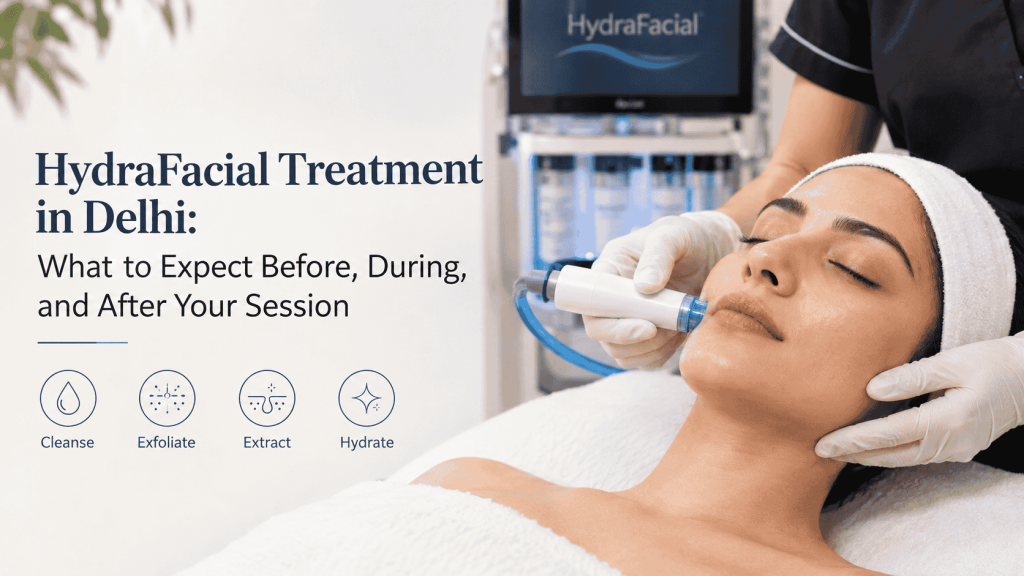
Delhi’s heat, dust, pollution, strong sunlight, and changing humidity can leave skin feeling oily, dry, congested, or simply less fresh than usual. A consistent skincare routine can help, but some people also look for professional treatments that combine cleansing, exfoliation and hydration in one session.
HydraFacial is one such treatment. It is a non-invasive hydradermabrasion procedure. It uses a specialised device to cleanse and exfoliate the skin, perform suction-assisted extraction and apply topical solutions. The treatment generally has minimal downtime. Experience and results can vary depending on the person’s skin and the protocol used.
If you are considering HydraFacial treatment in Delhi, it helps to know what happens before, during and after the procedure, what it can realistically do, and when another treatment may be more appropriate.
What Is a HydraFacial?
HydraFacial is a branded form of hydradermabrasion. The procedure combines several steps in one session that include cleansing, exfoliation, suction, and topical hydration.
The device uses a specialised handpiece to loosen surface buildup and remove impurities while solutions are applied to the skin. The exact products, suction intensity, and treatment steps can vary according to the device, protocol and the person’s skin.
Hydradermabrasion is sometimes compared with microdermabrasion because both involve superficial exfoliation. The techniques are not identical, however. Microdermabrasion mechanically exfoliates the skin, while hydradermabrasion combines exfoliation with liquid solutions and suction.
Who May Benefit from HydraFacial?
HydraFacial is commonly considered by people who are concerned about:
- Dull-looking skin
- Surface dryness or dehydration
- Rough or uneven texture
- Mild congestion
- Visible pores
- Excess surface oil
- Lack of skin radiance
It may also be used as part of a broader skincare or aesthetic plan.
People with persistent acne, significant pigmentation, acne scars or other skin conditions may need medical treatment rather than relying on a facial procedure alone.
What Should You Do Before a HydraFacial?
A good treatment starts with an assessment rather than the procedure itself.
The practitioner should understand your skin concerns, previous treatments and current skincare routine. You should also mention any medications or products that may make your skin more sensitive.
Tell the practitioner if you have:
- Very sensitive or easily irritated skin
- An active skin infection or significant inflammation
- A history of cold sores
- A tendency to develop scars or dark marks after skin injury
- Recently undergone another exfoliating or aesthetic treatment
- Recently experienced sunburn
- Used prescription acne medication such as isotretinoin
The relevance of these factors can depend on the treatment being performed. For example, the American Academy of Dermatology advises people to discuss medical conditions, medicines, a history of easy scarring and recent isotretinoin use with a dermatologist before microdermabrasion.
HydraFacial is not the same procedure as microdermabrasion, so microdermabrasion guidance should not automatically be treated as a contraindication to HydraFacial. A qualified practitioner should assess the individual circumstances before proceeding.
Questions to Ask Before Your Treatment
A consultation is a good time to ask practical questions, such as:
- Which HydraFacial protocol will be used?
- What solutions or boosters will be applied?
- Who will perform the treatment?
- Is the procedure appropriate for my current skin condition?
- How many sessions are likely to be recommended?
- What results should I realistically expect?
- Are there any additional charges for boosters or add-ons?
- What aftercare will I need?
Understanding the treatment beforehand can help you make a more informed decision.
What Happens During a HydraFacial?
The exact protocol can differ between clinics and devices. A typical session may involve the following steps.
1. Cleansing
The skin is first cleansed to remove makeup, oil, sunscreen and surface impurities. This prepares the skin for the treatment that follows.
2. Exfoliation
A specialised handpiece is used to exfoliate the superficial layer of the skin. The aim is to loosen dead skin cells and surface buildup without the more aggressive sensation associated with some resurfacing procedures.
The intensity can be adjusted depending on skin sensitivity and the treatment plan.
3. Solution-Based Exfoliation
A solution may be applied to further loosen surface impurities . Depending on the protocol, the formulation can contain exfoliating ingredients such as acids.
The type and concentration of the solution should be selected according to the individual’s skin and treatment goals rather than applied identically to every patient.
4. Suction-Assisted Extraction
The device uses controlled suction to remove loosened impurities, excess oil and material from congested pores.
Extraction is different from manually squeezing individual blackheads or whiteheads. There is generally less direct pressure on the skin, although some people may experience temporary redness or sensitivity.
5. Hydration and Topical Application
The final stage involves applying hydrating or other topical solutions to the skin. Some protocols may include additional serums or boosters.
The ingredients used can vary, so patients should ask what is being applied and why it has been selected for their skin.
A typical session may take around 30 to 45 minutes, although the duration can vary depending on the treatment protocol and whether additional steps are included.
Does a HydraFacial Hurt?
Most people describe HydraFacial as comfortable, although the sensation can vary.
You may notice the movement of the handpiece, mild suction and a cooling or wet sensation as solutions are applied. The extraction step can feel slightly stronger around areas with congestion.
A properly adjusted treatment should not be expected to cause significant pain. If the skin feels intensely uncomfortable or burning during the procedure, tell the practitioner immediately.
What Can You Expect After a HydraFacial?
One of the reasons people choose HydraFacial is the relatively short recovery period associated with superficial treatment. Immediately afterwards, the skin may feel:
- Smoother
- Softer
- More hydrated
- Cleaner
- Less congested
Some people may also notice a fresher or brighter appearance.
Temporary redness or sensitivity can occur. A recent imaging study found that participants receiving more intensive hydradermabrasion experienced visible redness that generally resolved within several days, while those receiving a milder treatment did not show visible redness immediately afterwards.
Individual responses can differ, however. Your skin condition, treatment intensity and the products used can all affect the recovery period.
What HydraFacial Cannot Do?
It is equally important to understand what the treatment is not designed to achieve.
HydraFacial may improve the appearance and feel of the skin’s surface, but it should not be considered a solution for every skin concern.
Deep acne scars, significant skin laxity, wrinkles and some forms of pigmentation may require other treatments. Active acne may also require a proper dermatological assessment, particularly when lesions are persistent, painful or widespread.
How to Care for Your Skin After a HydraFacial
Aftercare is usually simple, but it still matters.
- Use a gentle cleanser and moisturiser unless your practitioner has recommended a different routine.
- Avoid introducing harsh scrubs, strong exfoliating products or other potentially irritating products immediately after treatment unless they are specifically part of your prescribed skincare plan.
- Sun protection is also important after procedures that exfoliate the skin. So, never forget to apply sunscreen.For daily use, a broad-spectrum sunscreen with SPF 30 or higher is a practical choice. Reapply it as needed, particularly when spending extended periods outdoors.
If you develop persistent redness, significant swelling, blistering, severe discomfort, or another unexpected reaction, contact the practitioner who performed the treatment.
How Many HydraFacial Sessions Do You Need?
There is no single number of sessions that applies to everyone.
Some people seek HydraFacial as an occasional treatment before an event, while others may be advised to have a series depending on their skin concerns and treatment goals.
The appropriate frequency should be decided after assessing your skin and considering other products or procedures you are using. More treatments are not automatically better, particularly if your skin is sensitive or already undergoing other exfoliating treatments.
The HydraFacial Approach at Dermapuritys
Dermapuritys offers HydraFacial for concerns such as dullness, dehydration, surface congestion and uneven skin texture. The treatment protocol can be adjusted according to the individual’s skin and may include different combinations of exfoliation, extraction and topical solutions.
Before proceeding, patients can discuss their skin concerns, the products being used and the results they hope to achieve. This allows the treatment plan to be considered in the context of their existing skincare routine and overall skin condition.
The focus is on selecting an appropriate protocol rather than following the same treatment sequence for every patient. Where a concern requires a different form of dermatological care, other treatment options can also be considered.
Key Takeaway
HydraFacial is a convenient option for people looking for superficial exfoliation, cleansing and hydration in a single treatment. It may leave the skin feeling smoother and more hydrated, and some studies have reported improvements in aspects of skin appearance.
The experience can vary based on your skin, the treatment protocol and the products used. A consultation with Dermapuritys before the session can help you understand what the treatment can offer and whether it fits your current skincare needs.
If you are exploring HydraFacial treatment in Delhi, look at the complete treatment experience rather than just the advertised price. The protocol, professional assessment, products used and aftercare can all influence the quality of your experience and results.