

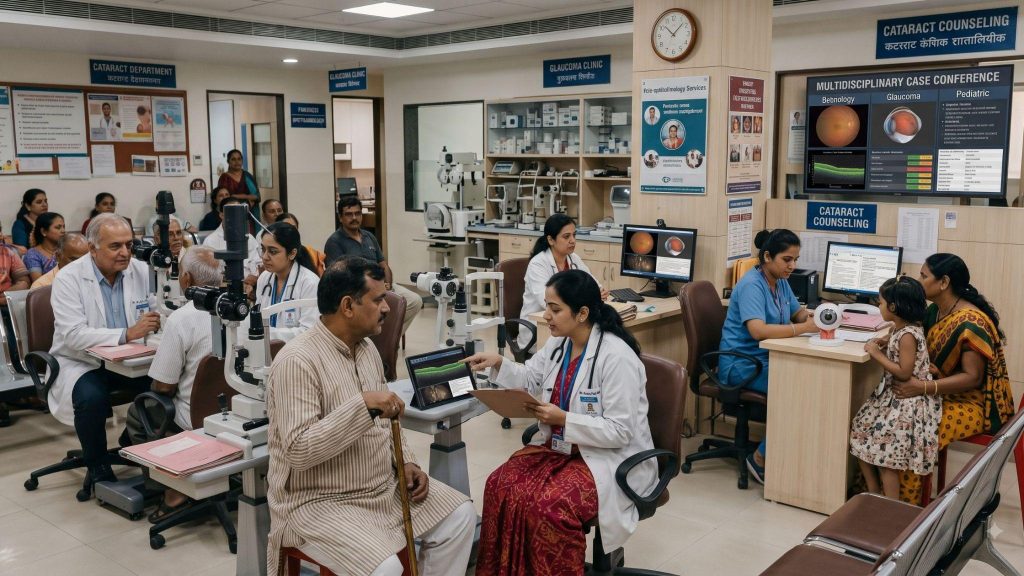
Eye care often involves more than treating a single symptom or condition. A patient may need support from different specialists for concerns related to the retina, cornea, glaucoma, cataract, or other eye conditions.
A multidisciplinary approach brings these experts together, helping them share findings, plan treatment carefully, and provide coordinated care. This can make diagnosis, treatment decisions, and follow-up more organised for the patient.
Brings Different Eye Specialists Together
A multidisciplinary approach at an eye hospital allows ophthalmologists from different specialities to review a patient’s condition together when required. This gives patients relevant expertise without treating every concern as a separate problem.
- Specialist input: Cataract, retina, glaucoma, cornea, and other specialists can contribute according to the patient’s needs.
- Connected decisions: Doctors can share findings before deciding the next step in care.
- Wider assessment: More than one condition can be considered while planning treatment.
Helps Build a More Complete Diagnosis
Many eye conditions can cause similar symptoms, so diagnosis should look beyond the most obvious complaint. A multidisciplinary team can combine clinical examination and diagnostic tests to understand the condition.
- Relevant testing: Eye pressure checks, retinal evaluation, corneal assessment, and other tests may be advised when needed.
- Early identification: Additional concerns, such as raised eye pressure or retinal changes, may be detected during assessment.
- Better clarity: Doctors can understand which condition needs attention first.
Improves Treatment Planning
After diagnosis, specialists can work together to decide how treatment should proceed. This is useful when a patient has more than one eye condition or needs different forms of care.
- Correct sequence: Medicines, laser procedures, surgery, or monitoring can be planned in a suitable order.
- Fewer gaps: Better coordination can reduce delays between consultation, testing, and treatment.
- Clearer guidance: Patients can understand what is being treated and what comes next.
Supports Safer Follow-Up Care
Eye care often continues after treatment. Follow-up appointments help doctors monitor healing, vision, eye pressure, or changes in the condition over time.
- Continuous monitoring: Progress can be checked at intervals.
- Timely referral: A patient can be sent back to the relevant specialist if another concern develops.
- Shared records: Connected teams can follow earlier findings and treatment decisions more easily.
Makes Care More Convenient For Patients
Choosing an eye hospital near me that offers access to different specialists, diagnostic tests, procedures, and follow-up care in one place can make the overall treatment process easier to manage.
- Easier coordination: Patients can avoid arranging separate visits across multiple centres.
- Access to expertise: Different specialists can be involved when required.
- Organised care: The best eye hospital for an individual should support clear communication and appropriate specialist care throughout their treatment.
Final Thoughts
A multidisciplinary approach improves treatment by combining specialist knowledge, better diagnosis, coordinated planning, and consistent follow-up. It helps an eye hospital look at the patient’s eye health rather than treating one symptom in isolation.
For patients with simple or complex eye conditions, this connected approach can make care more organised, informed, and easier to follow.